Why Purpose Is the Most Underrated Business Tool
The question I get asked most often
Business owners in construction and trades ask me a lot of questions. Questions about cash flow. About hiring. About when to take on a bigger contract and when to walk away from one. About what to do when a key person leaves and takes half the team's knowledge with them.
But the question I get asked most often, usually quietly and often toward the end of a conversation, is some version of this: "Why does it feel like we are working harder than ever and getting less traction?"
It is a good question. And the answer is almost always the same.
The effort is there. The purpose is not.
What purpose actually means in a business context
Purpose is one of those words that has been so thoroughly colonised by corporate culture that it has almost lost its meaning. Mission statements on lobby walls. Values posters in the break room. A paragraph in the annual report that nobody reads.
That is not what I mean.
In a business context, purpose is simply this: a clear, shared understanding of why this business exists, what it is building toward, and why that matters to the people inside it. Not a slogan. A genuine answer to a genuine question.
When people inside a business understand the purpose, something shifts. They start making better decisions independently. They do not need to be told what to do in every situation. They already know, because they understand what the business is trying to become and their role inside that.
When purpose is absent, people default to doing what they are told and nothing more. The owner becomes the decision-maker for everything, the bottleneck for everything, and eventually the exhausted single point of failure for everything.
Where I first understood this
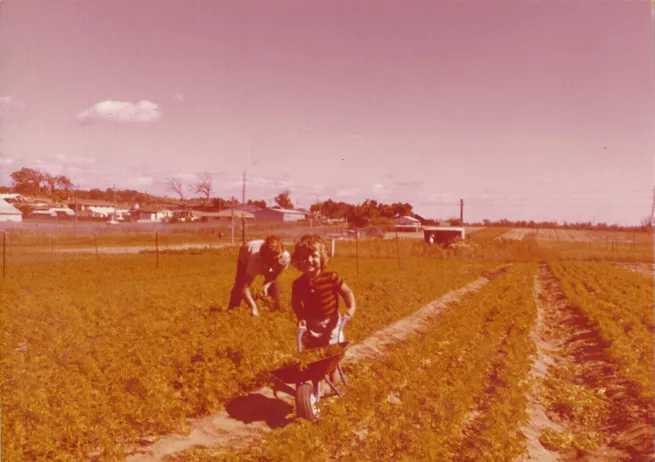
I grew up on a market garden in Spearwood, Western Australia. My Croatian grandparents arrived in Australia with nothing but a suitcase and built a life from the ground up.
One of my clearest memories from that time is watching my grandmother work. She was out in that garden every single day, regardless of the weather. Not because she had to be. Because she understood exactly what she was building and exactly why it mattered. The garden fed the family. The family was the point of everything.
The neighbours had the same understanding. When it was time to harvest the potatoes, they showed up without being asked, without being paid, because they understood the purpose and they were part of it.
I have spent 30 years looking for that kind of shared ownership in professional environments. When I find it, the results are consistently extraordinary. When it is absent, no amount of technical competence or financial incentive fully replaces it.
The guitar story
I started learning guitar at the age of six. From six to eleven, I went to lessons every week and I wanted to quit almost every single time. Not because the guitar was hard. Because I had no reason for it.
At eleven, I quit.
At fourteen, my cousin started playing drums and suggested we form a band. Within 24 hours, my relationship with the guitar was completely transformed. I started practising for hours every day. Not because someone told me to. Because I had a purpose. There was a band to build, songs to learn, a stage to get onto.
The effort never felt like effort. It was just part of the thing I was trying to do.
I went on to play in bands through my teens and twenties. Performed in pubs, travelled overseas with music, recorded songs. The hard work compounded because the purpose sustained it.
I have watched this dynamic play out in construction teams, in executive leadership groups, in small trades businesses trying to get to the next level. The people who work the hardest and sustain it over the longest period are almost never the ones with the most technical skill. They are the ones who understand clearly what they are building and why.
The practical question
If you are a business owner reading this, here is the question worth sitting with this week.
If I walked into your business tomorrow and asked your three most experienced team members what your business exists to do and what it is building toward, would their answers be the same?
If the answer is no, or if you are not sure, that is not a problem with your people. It is a structural gap.
Purpose is the first and most fundamental pillar of the PAVE Framework, the advisory framework I have built from three decades of working in construction, infrastructure and business. It is first because nothing else works properly without it.
More on how to build it deliberately, not accidentally, next week.
Every Sunday I publish Foundation Notes, a weekly newsletter where I share one story and one lesson from 30 years of construction, business and leadership. If this resonated, subscribe at https://gavranicfoundationnotes.substack.com


